How To Build A Sales Process That Scales With Your Business
Have you ever felt like your sales team is running on a hamster wheel? You are putting in the effort, leads are coming in, but the results feel sporadic and unpredictable. That is a clear sign that you do not have a scalable sales process. Building a sales engine is like building the foundation of a house; if you skip the blueprints, the structure will eventually crack under pressure. Scaling a business is not just about hiring more people; it is about creating a repeatable system that turns strangers into loyal customers without you needing to micromanage every single conversation.
What Exactly Is a Scalable Sales Process?
Think of your sales process as a GPS for your revenue growth. Without it, your sales reps are driving around looking at paper maps, hoping they might eventually stumble upon a closed deal. A scalable sales process is a series of documented, repeatable steps that your team follows to move a prospect from initial awareness to a signed contract. It acts as a safety net, ensuring that no lead falls through the cracks and that every team member knows exactly what to do next. When your process is scalable, you can drop a new hire into the mix and have them productive in weeks rather than months.
Laying the Foundation for Growth
Before you build the machine, you need to understand who you are building it for and what their journey looks like. If you try to sell everything to everyone, you will end up selling nothing to no one.
Defining Your Ideal Buyer Persona
Who is your dream client? I am not talking about general demographics. You need to get into their heads. What keeps them awake at night? What are the specific pain points that your product solves? By identifying your Ideal Customer Profile, you stop chasing low quality leads that suck up your time and focus exclusively on people who are actually ready to buy. This is the first step in creating a system that scales because it ensures your pipeline remains filled with high value prospects.
Mapping the Customer Journey
Every customer goes through a psychological shift from realizing they have a problem to trusting your solution. Your sales process must mirror this journey. If your prospect is just browsing for information, do not force them into a high pressure sales call. Instead, provide resources that build trust. By mapping the journey, you ensure your sales tactics align with the prospect’s current mindset.
Building the Core Stages of Your Sales Pipeline
Your pipeline is the lifeblood of your business. If it is clogged, your revenue slows down. Let us break down the critical stages you need to formalize.
Prospecting and Strategic Lead Generation
Stop waiting for the phone to ring. Scalable prospecting is about being proactive. Whether you are using outbound email campaigns, LinkedIn networking, or inbound content marketing, you need a system that fills your funnel consistently. When you have a predictable number of leads entering the top of your funnel, you can accurately forecast your future revenue.
The Art of the Qualification Process
Many sales teams lose time because they talk to the wrong people. Use a framework like BANT or MEDDIC to quickly determine if a prospect has the budget, the authority, and the need to move forward. If they do not fit the criteria, disqualify them early. It feels counterintuitive to say no to a lead, but it is the secret to high performance.
Crafting a Winning Proposal and Presentation
Your proposal should not be a dry document of features. It should be a narrative about the transformation your client will experience. Focus on outcomes rather than inputs. Use the “bridge” metaphor here; your product is the bridge between their current painful state and their future desired state.
Negotiation and Closing the Deal
Closing is not a high pressure sales tactic; it is the natural conclusion to a well executed discovery process. If you have done your job correctly, the “ask” should feel like a relief for the client. Be prepared to handle objections by uncovering the root cause, not just by offering a discount.
Leveraging Automation and Technology
Technology is not a replacement for human connection, but it is a massive force multiplier. If your team is spending their day on manual data entry, they are not selling.
Choosing the Right CRM for Future Growth
Your CRM is the brain of your sales organization. Do not settle for a basic spreadsheet. You need a platform that tracks every touchpoint and provides data driven insights. Choose a tool that grows with you, but prioritize ease of use. If the CRM is too complicated, your team will refuse to use it.
Automating Repetitive Tasks to Save Time
Think about the things you do every day that could be automated. Email follow ups? Scheduling calls? Updating lead statuses? Use automation tools to handle the busy work. This frees up your humans to do what they do best: build relationships and provide solutions.
Building and Onboarding Your Sales Team
You can have the best process in the world, but if your team does not know how to execute it, you will fail. Scaling means hiring for culture and fit while training for skill.
Hiring the Right People for the Right Roles
Do you need hunters who love the thrill of the chase, or farmers who excel at managing existing accounts? Define the roles clearly before you start the interview process. Look for candidates who are coachable and curious. Skill can be taught, but attitude is fixed.
Training and Onboarding for Success
Stop throwing people into the deep end and hoping they swim. Create a playbook that documents your process, your scripts, and your best practices. Pair new hires with top performers for shadowing. When onboarding is standardized, your ramp up time decreases significantly.
Continuous Measurement and Optimization
You cannot improve what you do not measure. This is the “science” side of the sales art.
Defining Key Metrics for Success
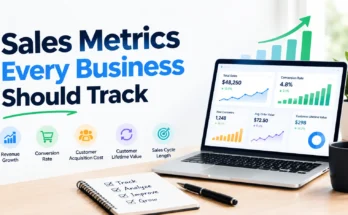
Focus on lead conversion rates, average deal size, and the length of your sales cycle. These are your leading indicators. If you see your conversion rate drop in the qualification stage, you know exactly where the process needs fixing.
Embracing Iterative Improvement
A scalable sales process is never finished. Every quarter, review your metrics and solicit feedback from your sales reps. What is working? What is causing friction? Make small adjustments rather than huge overhauls. This continuous cycle of learning is what keeps your business ahead of the curve.
Conclusion
Building a sales process that scales is not a one time project; it is a mindset. It is about moving away from “hero sales” where one person carries the team and toward a system that produces consistent results regardless of who is running it. By mapping the buyer journey, leveraging the right technology, and obsessing over your data, you create an engine that turns your business into a revenue machine. Start small, document your steps, and iterate as you go. Your future growth depends on the foundation you build today.
Frequently Asked Questions
1. How long does it usually take to implement a new sales process?
Usually, you can see initial results within 30 to 60 days. The key is to start with one segment of your business before rolling it out company wide.
2. Should I automate everything in my sales process?
Definitely not. Automate the repetitive tasks like scheduling and data entry, but keep the human element in discovery calls and negotiation. People buy from people, not from robots.
3. What is the most common mistake when scaling a sales team?
The most common mistake is hiring more people before you have a proven, documented, and repeatable process. Hiring without a process just adds more chaos to your current system.
4. How do I know if my sales process is actually working?
Look at your conversion rates. If you see a steady increase in the percentage of leads moving from one stage to the next, your process is working. If you are stuck, look at where the drop off is occurring.
5. Can a small business benefit from these enterprise level sales strategies?
Absolutely. Even if you are a team of two, having a defined process gives you a competitive advantage. It prepares you to scale before you even need the extra hands, making the transition to growth much smoother.